
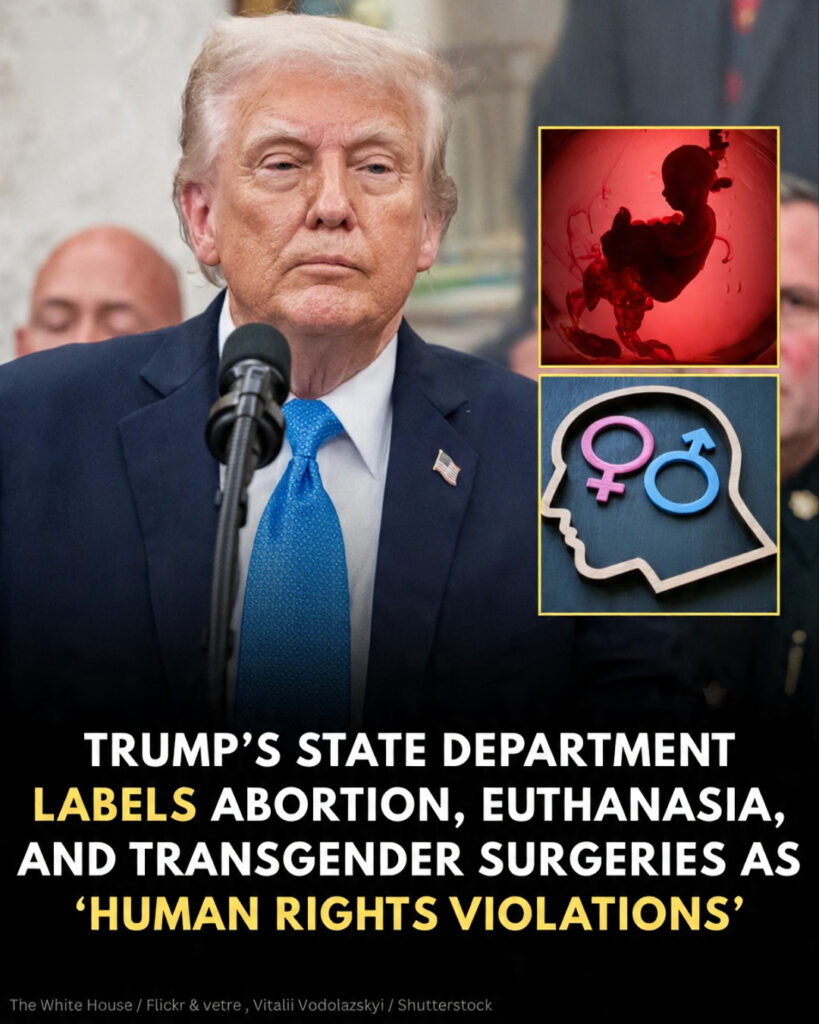
Washington, D.C. — The U.S. State Department under President Donald Trump is reworking its annual global human rights reports to include new categories that reflect the administration’s policy priorities, according to U.S. and international news outlets.
The Country Reports on Human Rights Practices, long a staple of U.S. foreign policy reporting, traditionally document internationally recognized individual, civil, and political rights, such as freedom from torture, fair trial rights, and protections for minority groups. These reports are mandated by U.S. law and submitted annually to Congress.
Under new directives issued this year, U.S. embassies and consulates have been instructed to gather and report data on abortion policies and state subsidization of abortion medications, as well as certain state laws regulating gender-related medical care, alongside more conventional human rights topics. Officials have also signaled a broader expansion of issues that diplomats will assess, including affirmative action and diversity policies.
According to U.S. government guidance reported in The Washington Post, the updated reporting criteria will ask diplomats to document the estimated number of abortions in a country, states’ role in subsidizing them, and policies on gender-affirming care for minors that are characterized in the directive as “chemical or surgical mutilation.”
The changes represent a significant departure from recent practice: previous reports focused primarily on violations such as torture, politically motivated killings, exploitation, and discrimination against marginalized minorities. Under the revised instructions, some of these longstanding human rights concerns — including discrimination against LGBTQ+ individuals — are receiving less emphasis or have been scaled back in scope.
What Will Be Included in New Reports?
Many of the expanded categories align with domestic policy actions taken earlier this year:
- In January 2025, the Trump administration issued an executive order titled “Protecting Children from Chemical and Surgical Mutilation,” aimed at restricting gender-affirming medical care for minors, describing such care in stark terms. The order directs federal agencies to withhold funding from gender transition procedures for people under 19.
- The administration also reasserted the Hyde Amendment policy, which prohibits the use of federal funds for elective abortions, and took executive actions curtailing federal support for abortion-related services.
Reactions and Implications
The changes have drawn criticism from human rights advocates who argue that broadening the definition of “human rights violations” to cover social policies like abortion and gender-related medical care departs from internationally recognized human rights standards. Some former U.S. officials expressed concern that de-emphasizing issues such as discrimination against minority populations could weaken the reports’ credibility as tools for defending global rights.
Also read this…
State Department officials supporting the changes have described them as reflecting a particular view of rights, emphasizing protections the administration says are grounded in religious or natural law principles.
The first U.S. human rights reports incorporating these new criteria are expected to be published next year, marking a notable shift in how the U.S. engages diplomatically on rights issues abroad.