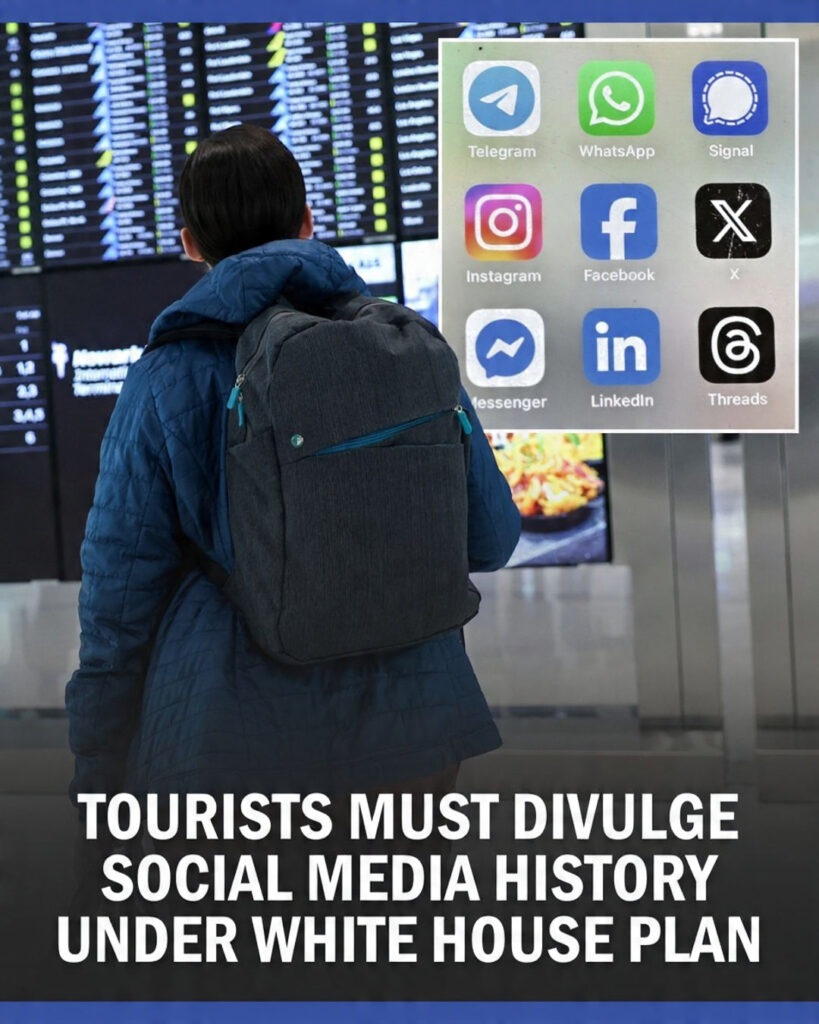
Washington, D.C. — Foreign tourists seeking entry into the United States could soon be required to disclose five years of their social media history under a newly proposed plan from the Trump administration. The Department of Homeland Security (DHS) outlined the measure in a notice published Wednesday in the Federal Register, marking one of the most sweeping digital-screening requirements ever considered for international visitors.
According to DHS, the proposal is designed to comply with Executive Order 14161, signed in January 2025, which aims to strengthen national security and prevent individuals who may pose threats from entering the country. Under the plan, social media information would become a mandatory data element for anyone applying through the Electronic System for Travel Authorization (ESTA).
“The data element will require ESTA applicants to provide their social media from the last five years,” the notice states.
ESTA is used to determine eligibility for travelers from 42 participating countries under the Visa Waiver Program, which allows visitors to stay in the U.S. for up to 90 days without a visa. Once approved, the travel authorization remains valid for two years.
The proposed rule change would impact millions of tourists annually, including visitors from U.S. allies such as Britain, France, Germany, Japan, and Australia, all of whom rely on the Visa Waiver Program for streamlined entry.
The White House justified the policy by citing national security concerns. “The United States must be vigilant during the visa-issuance process to ensure that those aliens approved for admission do not intend to harm Americans or our national interests,” the executive order states. It emphasizes the need to screen applicants who may “espouse hateful ideology” or seek to exploit immigration laws.
Legal and immigration experts warn the proposal raises significant privacy issues. “This method involves looking at online speech, and then denying travel based on discretion and policy about the kinds of things that get said,” said Bo Cooper, a partner at immigration law firm Fragomen, speaking to The New York Times. “It’ll be interesting to watch the tourism numbers.”
Under former President Trump, the United States has steadily increased vetting measures for foreign visitors. The public now has 60 days to comment on the proposal before DHS considers implementing it.