By Staff Reporter
Washington — “If you kill a police officer, you should face the ultimate punishment.”
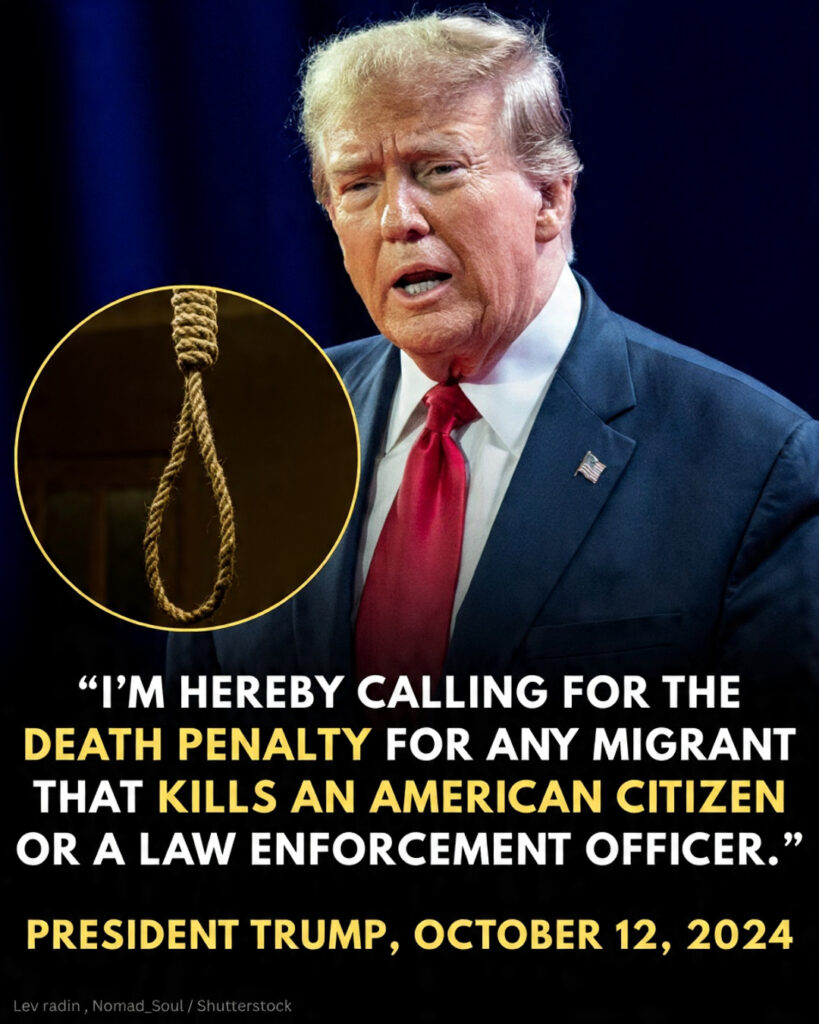
That was the blunt message from former President Donald Trump this week as he renewed his call for a mandatory death penalty for anyone convicted of murdering a law enforcement officer.
Speaking to supporters and allies, Trump framed the proposal as both a deterrent and a moral statement — one he says draws a clear boundary in a time of rising attacks on police.
“We have to send a message,” Trump said. “If you target our cops, you will pay the highest price. There can be no ambiguity about that.”
Why Trump Is Raising the Issue Now
The renewed push comes amid persistent concerns about violence against law enforcement. According to data from the National Law Enforcement Officers Memorial Fund (NLEOMF),
- 136 officers were killed in the line of duty in 2023,
- with felonious killings accounting for more than half of those deaths.
While numbers fluctuated slightly in 2024, ambush-style attacks and shootings remained a major cause of officer fatalities.
Trump allies argue these numbers reinforce the need for tougher penalties.
“Police don’t get to clock out of danger,” one former federal prosecutor said. “The punishment should reflect the risk they take every day.”
A Contrast With the ‘Defund the Police’ Debate
Trump and his supporters draw a sharp contrast between his proposal and what he labels the left’s ‘defund the police’ ideology — a movement that gained traction after 2020 but has since lost support in many major cities.
Several Democratic-led cities that reduced police funding later reversed course as violent crime surged. New York, Los Angeles, and Chicago all restored or increased police budgets in subsequent years after spikes in shootings and assaults.
Trump points to those reversals as validation.
“They tried defunding. It failed. Crime went up. Cops were abandoned,” Trump said. “I stand with law enforcement — always.”
What Would a Mandatory Death Penalty Mean?
Under Trump’s proposal, judges would be required to impose capital punishment upon conviction for the murder of a police officer, removing sentencing discretion.
Legal experts note that:
- Federal law already allows the death penalty for killing a federal law enforcement officer,
- But Trump’s plan would seek to expand and standardize the punishment nationwide.
However, such a law would likely face constitutional challenges, especially in states that have abolished the death penalty or imposed moratoriums.
Still, Trump supporters argue the symbolism matters just as much as the legal mechanics.
“This is about restoring respect for the badge,” said a retired police chief. “When criminals know the consequences are absolute, it changes behavior.”
Critics Push Back
Civil rights groups and death penalty opponents argue that mandatory sentencing laws:
- Remove judicial discretion
- Risk of wrongful convictions
- And do not conclusively reduce violent crime
They also point out that 22 U.S. states have abolished the death penalty, and others rarely use it.
But Trump allies counter that police killings are a unique category of crime.
“This isn’t about ideology,” a Trump adviser said. “It’s about protecting the people who protect everyone else.”
A Familiar Trump Theme: Law, Order, and Clarity
For Trump, the issue fits squarely within a political identity he has cultivated for years — law and order, public safety, and unapologetic support for police.
From backing police unions to opposing bail reform, Trump has consistently argued that clear consequences deter crime, while ambiguity emboldens criminals.
“Our cops shouldn’t have to wonder if the system has their back,” Trump said. “They should know it does.”
The Bottom Line
Trump’s call for a mandatory death penalty for cop killers is unlikely to pass quietly. It touches on deep national debates over capital punishment, criminal justice reform, and public safety.
But politically, it reinforces a message Trump has returned to repeatedly:
that support for law enforcement is non-negotiable, and that attacks on police represent not just crimes, but assaults on the rule of law itself.
As one police union leader put it, “You don’t have a country if you don’t protect the people enforcing the law.”