
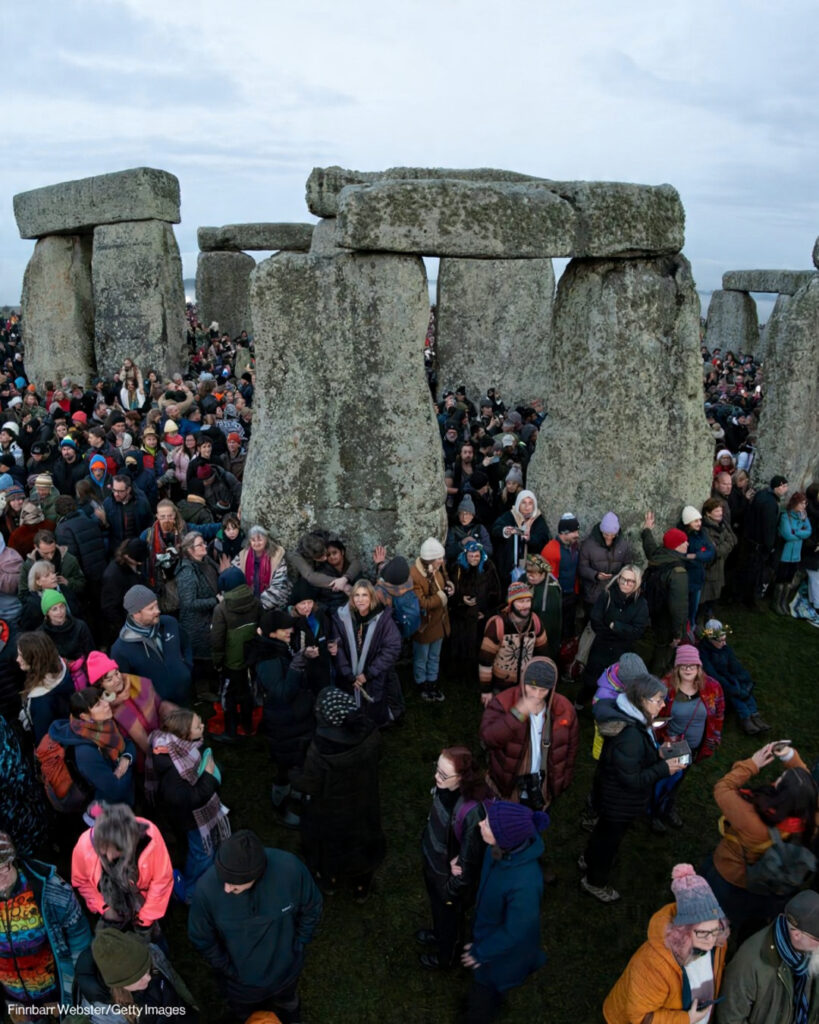
STONEHENGE, England — As the first rays of sunlight broke over the horizon on Sunday morning, thousands of people erupted into cheers, song, and rhythmic drumming around the ancient stones of Stonehenge, welcoming the winter solstice, the shortest day of the year in the Northern Hemisphere. Wrapped in heavy coats, cloaks, and elaborate costumes inspired by ancient traditions, the crowd stood patiently through the cold and darkness in a wide field of southwest England, united by a moment that has drawn people to this place for millennia.
The winter solstice occurs when the sun reaches its lowest and shortest arc across the sky, resulting in the least amount of daylight all year. Astronomically, it marks the official beginning of winter in the Northern Hemisphere. In southern regions of the globe, it is the opposite — the longest day of the year, signaling the start of summer.
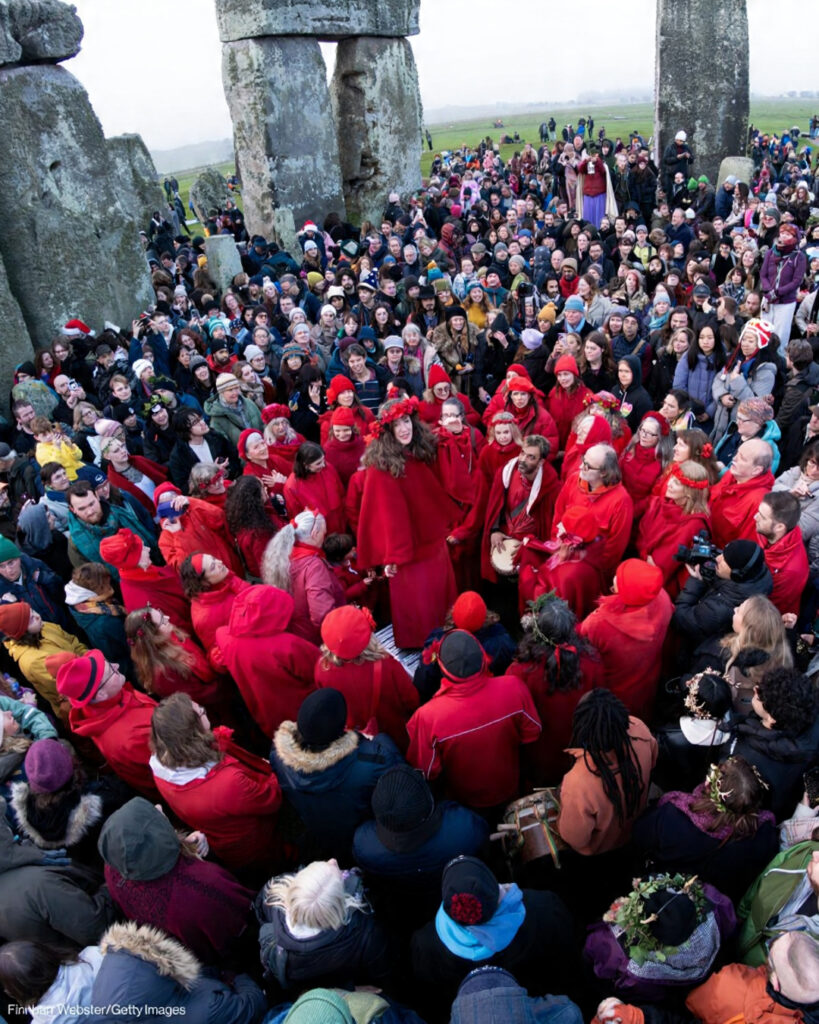
At Stonehenge, however, the solstice is far more than a scientific milestone. It is a deeply symbolic and spiritual event, rooted in human history and stretching back thousands of years.
A Sacred Alignment Built in Stone
Stonehenge was constructed in stages between approximately 3000 BC and 1500 BC, making parts of the monument more than 5,000 years old. Archaeologists and historians widely agree that the site was intentionally designed to align with the sun’s movement during the solstices. On the winter solstice, the sun sets in alignment with the monument’s central axis, while during the summer solstice, the sun rises behind the Heel Stone, casting light into the heart of the stone circle.
For ancient farming communities, these celestial events were essential markers of time. The solstices signaled changes in seasons that dictated planting, harvesting, and animal husbandry. The winter solstice, in particular, represented survival — the turning point after which daylight would slowly return, offering hope during the harshest months of the year.
Modern research suggests that the winter solstice may have been even more significant than the summer solstice to Stonehenge’s original builders. Evidence of large-scale feasting nearby, including animal bones dated to midwinter, indicates that people likely gathered at the site to mark the moment when the sun began its gradual return.
A Modern Pilgrimage with Ancient Roots
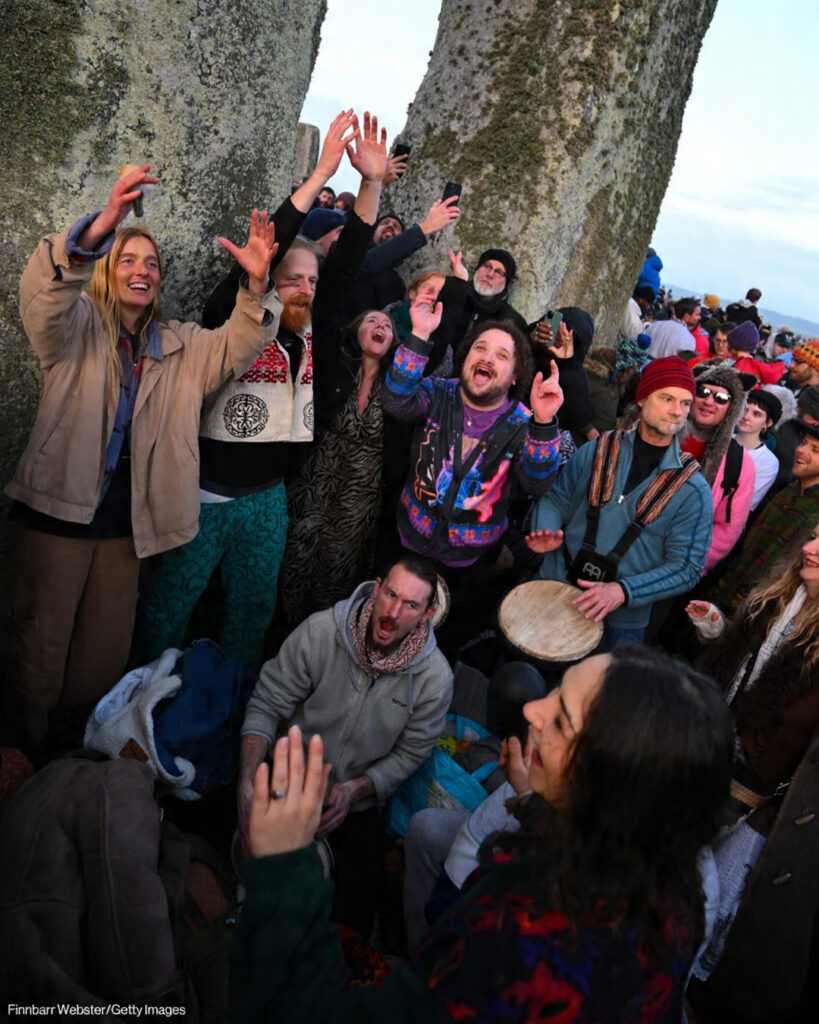
Today, the winter solstice remains a powerful draw. Attendees include modern-day Druids, pagans, spiritual seekers, historians, tourists, and families — many traveling long distances to be present at sunrise. English Heritage, which manages the site, allows open access to the stone circle during solstice events, a rare opportunity as the monument is usually protected from close contact to prevent erosion.
Some visitors danced barefoot on the frost-covered grass. Others stood quietly, eyes closed, hands resting on the stones, reflecting in silence. As the sun appeared, drums echoed across the plain, voices rose in celebration, and cameras captured the brief golden light illuminating the ancient pillars.
Many participants describe the experience as deeply personal. For some, it is a spiritual renewal; for others, a reminder of humanity’s enduring relationship with nature and the cosmos. Despite the cold temperatures and early hour, the atmosphere was one of warmth, connection, and shared meaning.
Science, Symbolism, and Renewal

Astronomically, the winter solstice occurs when Earth’s axial tilt points the Northern Hemisphere furthest away from the sun. This results in the shortest period of daylight and the longest night of the year. While it marks the start of winter, it also signals a turning point: from this day forward, daylight gradually increases, minute by minute, until it reaches its peak at the summer solstice in late June.
That gradual return of light is why many cultures throughout history have viewed the winter solstice as a time of rebirth and renewal. Ancient Roman festivals such as Saturnalia, Nordic Yule traditions, and many later winter celebrations across Europe and beyond are rooted in solstice symbolism.
Stonehenge stands as one of the clearest physical testaments to how deeply early societies observed and honored these cosmic cycles. Long before modern calendars or telescopes, its builders tracked the sun with remarkable precision, embedding astronomical knowledge directly into the landscape.
Enduring Relevance in a Modern World
In an age dominated by digital timekeeping and artificial light, the continued draw of Stonehenge’s solstice gatherings highlights a timeless human impulse: to pause, look skyward, and find meaning in the natural rhythms of the Earth.
As the sun climbed higher over the ancient stones on Sunday, cheers faded into conversation, drums grew quiet, and people slowly dispersed — some heading home, others lingering among the stones. Yet the significance of the moment remained. From prehistoric farmers to modern pilgrims, Stonehenge continues to serve as a bridge between past and present, reminding humanity that even on the darkest day of the year, the light always returns.