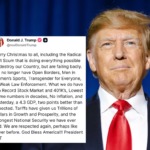
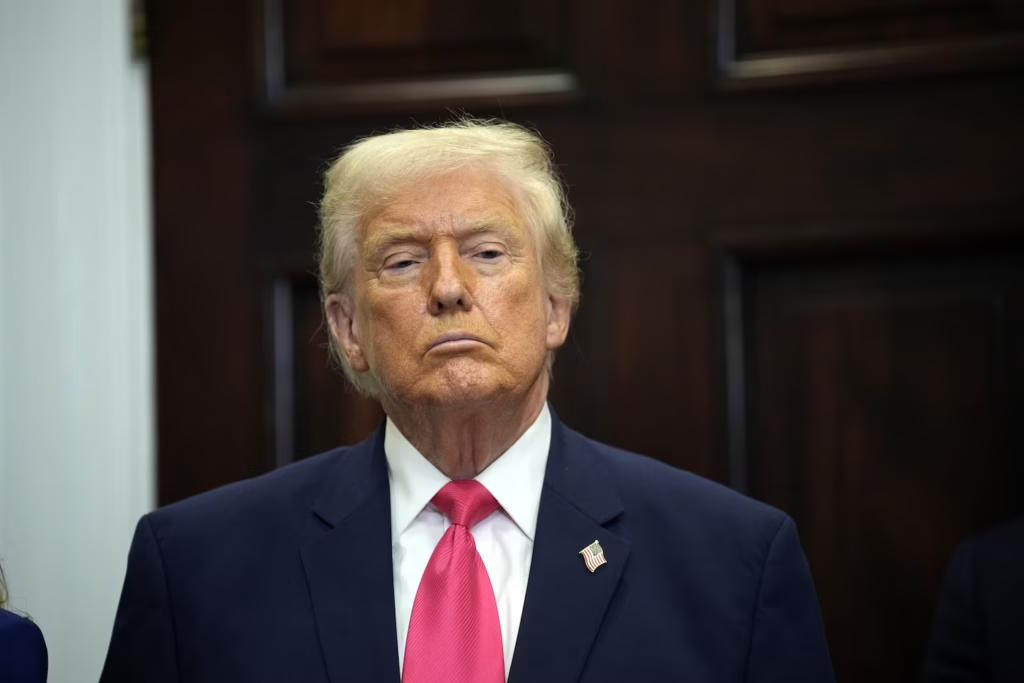
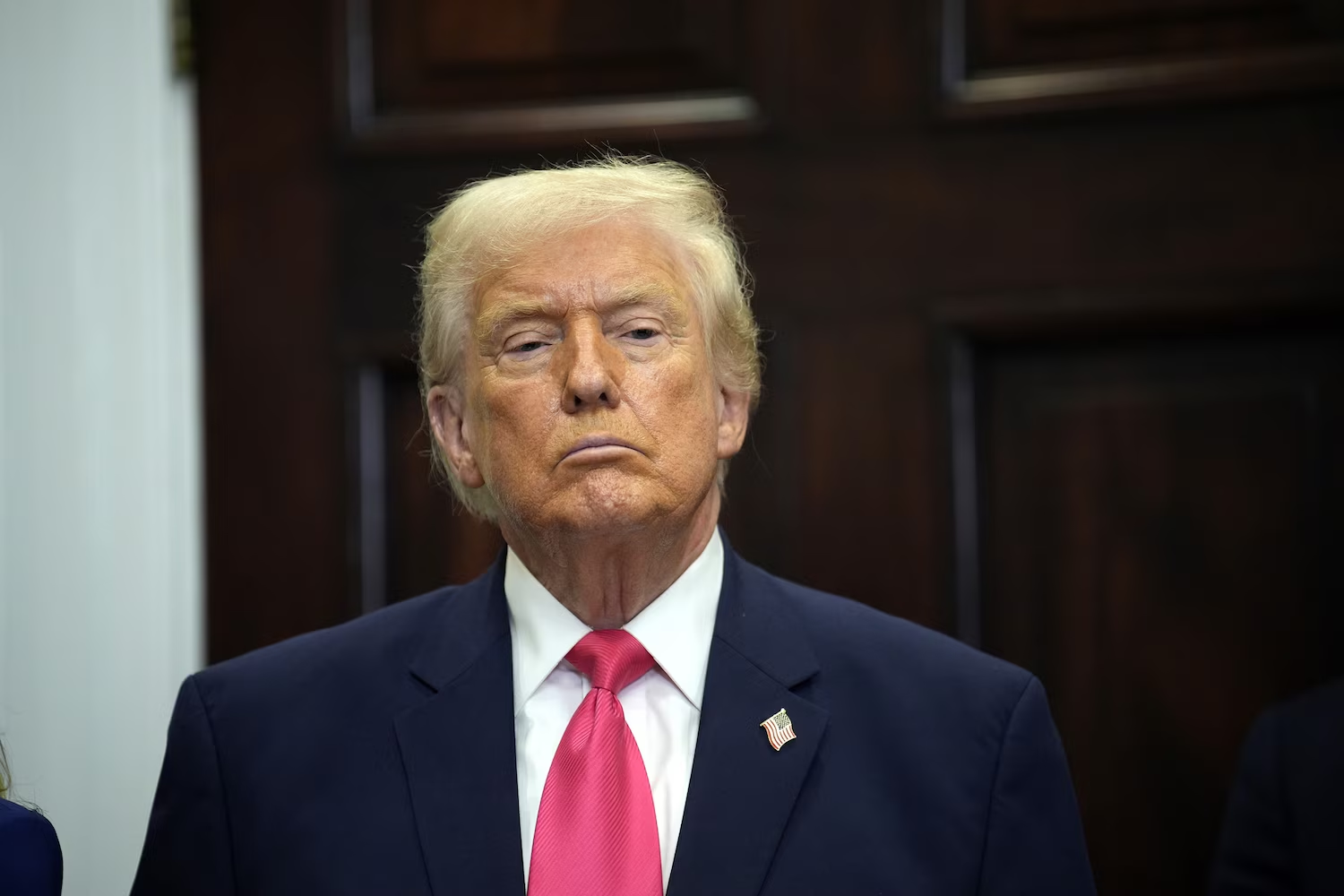
WASHINGTON — In what could become one of the most consequential separation-of-powers cases in decades, the U.S. Supreme Court on Monday heard arguments over President Donald Trump’s attempt to remove Federal Trade Commission (FTC) Commissioner Rebecca Slaughter — a move that challenges more than a century of precedent protecting independent agencies from direct presidential control.
For generations, agencies such as the FTC, Federal Reserve, FCC, SEC and others have operated with structural safeguards meant to shield regulatory decisions from political pressure. Congress intentionally designed these entities to ensure continuity, bipartisan oversight, and stability in areas ranging from financial markets to transportation, labor standards, and consumer protections.
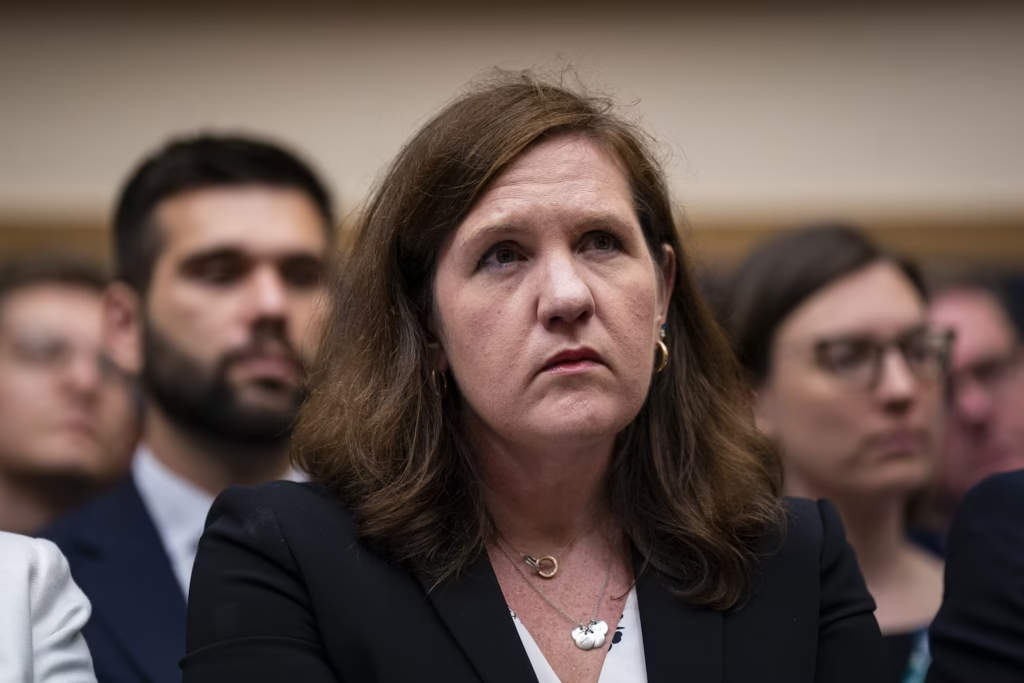
Trump’s decision to fire Slaughter, a Democrat appointed in 2023 to a fixed seven-year term, sparked immediate legal backlash. Federal law states that FTC commissioners may only be removed for “inefficiency, neglect of duty, or malfeasance in office,” protections explicitly crafted to prevent presidents from reshaping commissions based on ideology alone. Lower courts ruled Slaughter’s removal unlawful.
But the Trump administration argues those protections are unconstitutional. In briefs filed with the Court, Trump’s lawyers assert that Article II of the Constitution gives the president full authority over “executive officers of the United States,” including the power to fire them at will. Anything less, they contend, obstructs the president’s ability to faithfully execute the laws.
The case revives a debate dating back to 1935, when the Supreme Court unanimously upheld the independence of such agencies, declaring their quasi-legislative and quasi-judicial functions distinct from the executive branch. Several current justices, however, have indicated they believe that ruling should be narrowed — or overturned entirely.
If the Court sides with Trump, the presidency would gain sweeping influence over regulatory bodies, enabling rapid turnover of agency members and potentially overturning decades of political neutrality. Legal analysts warn it could reshape how agencies conduct investigations, enforce rules, and influence markets, injecting uncertainty into sectors that rely on long-term regulatory consistency.
The impact is already visible. After dismissing both Slaughter and fellow Democratic commissioner Alvaro Bedoya earlier this year, Trump now oversees an FTC panel devoid of Democratic members — a first in modern history. The Court also declined Slaughter’s request to remain in her position while litigation proceeds, a 6-3 decision that experts say strongly hints at the likely outcome.
Beyond the FTC, the ruling will determine the fates of Cathy Harris of the Merit Systems Protection Board and Gwynne Wilcox of the National Labor Relations Board, both removed by Trump under similar circumstances. The Federal Reserve, however, stands partly outside the scope of this case; the Court has previously emphasized its unique, quasi-private structure dating back to the nation’s earliest banking institutions. Trump’s attempt to fire Fed Governor Lisa Cook will be heard separately next month.
The stakes reach far beyond individual commissioners. A ruling in Trump’s favor could usher in a new era in which presidents exercise direct control over agencies long viewed as independent — fundamentally altering the balance of power within the federal government.
The Court is expected to issue its decision by June 2026, a ruling that could redefine how the American government functions for generations to come.