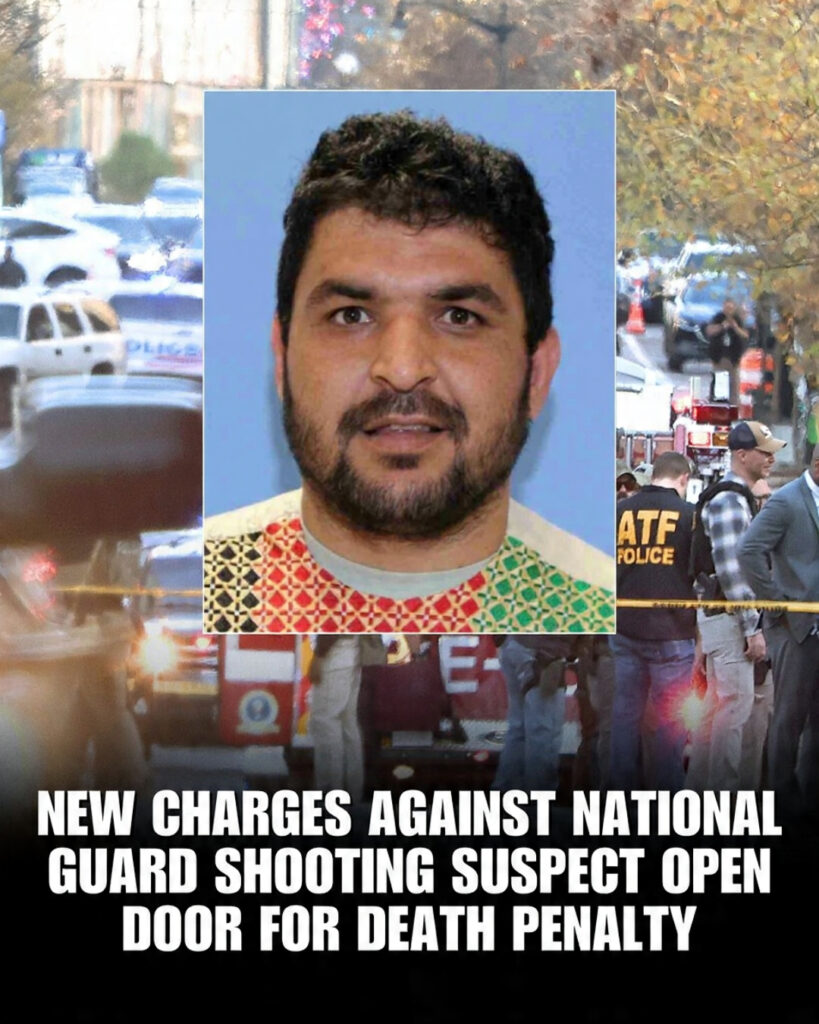
WASHINGTON, D.C. — Federal prosecutors have filed new charges against Rahmanullah Lakanwal, the Afghan national accused of carrying out an ambush-style shooting that left one West Virginia National Guard service member dead and another seriously wounded near the White House, a move that also shifts the case into a court system where the death penalty can be considered.
The victim, identified by authorities as Spc. Sarah Beckstrom, 20, was fatally shot during the attack. A second service member, Staff Sgt. Andrew Wolfe, 24, was wounded and required significant medical care, according to federal filings and public statements released in the days after the shooting.
Also read: Latest on Kamala Harris and Her Comments on Sexism and Public Image
“This transfer of this case from Superior Court to District Court ensures that we can undertake the serious, deliberate, and weighty analysis required to determine if the death penalty is appropriate here,” said U.S. Attorney Jeanine Pirro, announcing the venue shift and the newly filed federal counts.
What changed: from the D.C. local court to the federal court
Originally, the case was being handled in D.C. Superior Court, where prosecutors brought local charges such as first-degree murder and related offenses. But the government has now filed a federal complaint and moved proceedings into the U.S. District Court for the District of Columbia.
That venue change matters because Washington, D.C., does not have a death penalty under local law, while federal prosecutors can pursue capital punishment under federal statutes in qualifying cases—subject to a lengthy internal Department of Justice review process and additional legal thresholds.
The new federal charges
In the federal complaint, prosecutors accuse Lakanwal of transporting a firearm in interstate commerce with intent to commit a felony and transporting a stolen firearm in interstate commerce. The Justice Department said these counts are tied directly to the alleged plan to travel across the country and carry out the attack in the nation’s capital.
Authorities have described the gun used as a stolen .357-caliber revolver. Court records and reporting indicate the weapon was recovered at or near the scene after the shooting was stopped.
What investigators say happened on Nov. 26
According to federal and local accounts of the investigation, the shooting took place on November 26, 2025, in the Farragut West area of Washington, D.C.—a location close to major federal buildings and within the broader downtown corridor near the White House.
Prosecutors allege the attack was unprovoked and deliberate, describing it as “ambush-style.” Reporting based on charging documents says two senior National Guard officers nearby were able to subdue the suspect after the shots were fired, helping end the threat.
Read more: Vice President JD Vance Condemns Racial Attacks on Wife, Calls Out Extremism and Political Rhetoric
Lakanwal has pleaded not guilty to the initial local charges, and he remains entitled to the presumption of innocence as the case proceeds through court.
Who the suspect is, and what authorities are scrutinizing
Investigators and government statements identify Lakanwal as an Afghan national who entered the United States in 2021 during the large-scale evacuation and resettlement effort known as Operation Allies Welcome. Reporting also notes he previously had ties to U.S. efforts overseas, including work that, according to accounts in court-related coverage, involved supporting U.S. operations in Afghanistan.
Since the filing of the federal charges, the case has also sparked renewed political debate about vetting procedures for evacuees and the balance between resettlement, security screening, and post-arrival monitoring. Officials have not publicly laid out a detailed motive in the federal complaint itself, but prosecutors have framed the alleged conduct as a targeted, planned act that justified federal escalation and a broader penalty review.
What comes next
The move into federal court does not automatically mean prosecutors will seek capital punishment. In federal death-penalty cases, charging decisions typically involve an extensive DOJ review, consultations with the victims’ families, and multiple levels of authorization. Still, the venue change makes clear that federal authorities want the option available as they evaluate the facts and alleged intent behind the attack.
For now, the case continues on two tracks: the new federal firearm-related counts and the previously filed local D.C. charges, with the central factual questions—what exactly happened, what was planned, and why—set to be tested through evidence, motions, and, potentially, a trial.