

A joint operation involving the U.S. Coast Guard, federal law-enforcement agencies, and Miami-based maritime units has resulted in the seizure of more than 3,700 pounds of cocaine from a suspected drug-smuggling vessel off the coast of Miami Beach, authorities confirmed Friday. The haul—estimated to be worth over $28 million on the street—marks a historic milestone, with officials calling it the largest cocaine seizure conducted by a Coast Guard small boat station in nearly three decades.
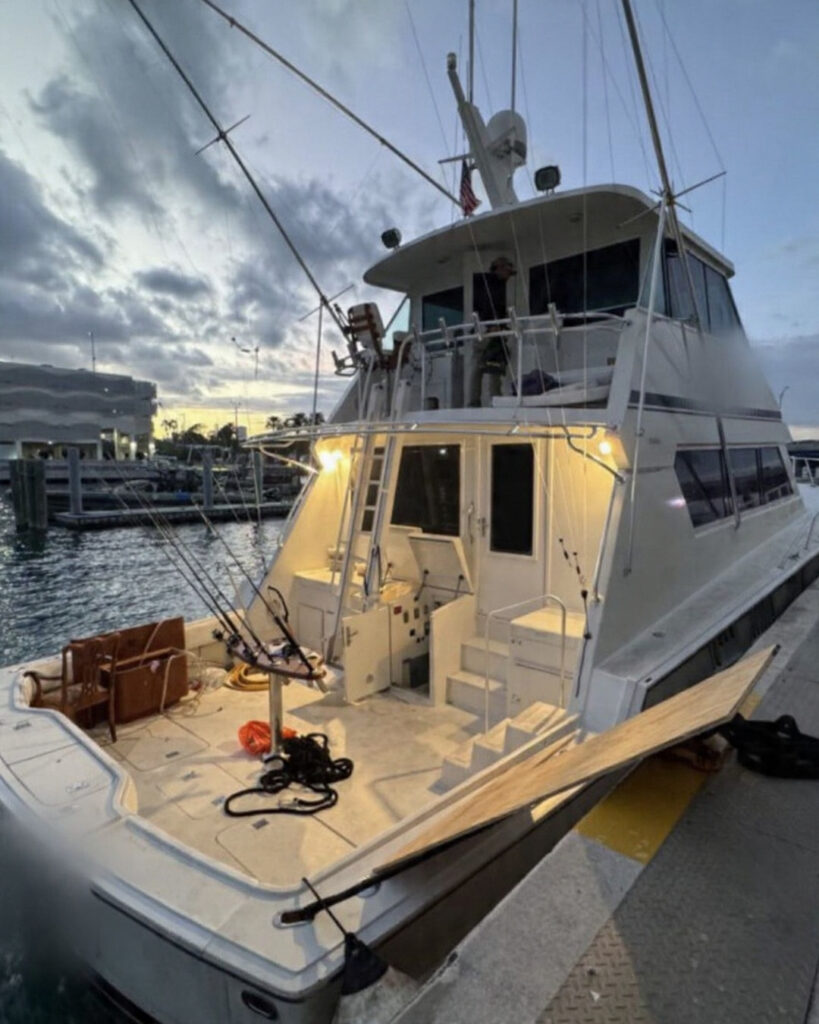
According to Lt. Matthew Ross, who supervised the interdiction effort, the large sport-fishing vessel was intercepted after Coast Guard crews detected suspicious movement consistent with narcotics trafficking patterns in the region. Once officers boarded the craft, they discovered tightly wrapped bricks of cocaine stacked throughout concealed compartments and cabin spaces. The volume of narcotics found mirrors seizure levels more commonly associated with large offshore interdiction cutters, not small harbor-based Coast Guard units.
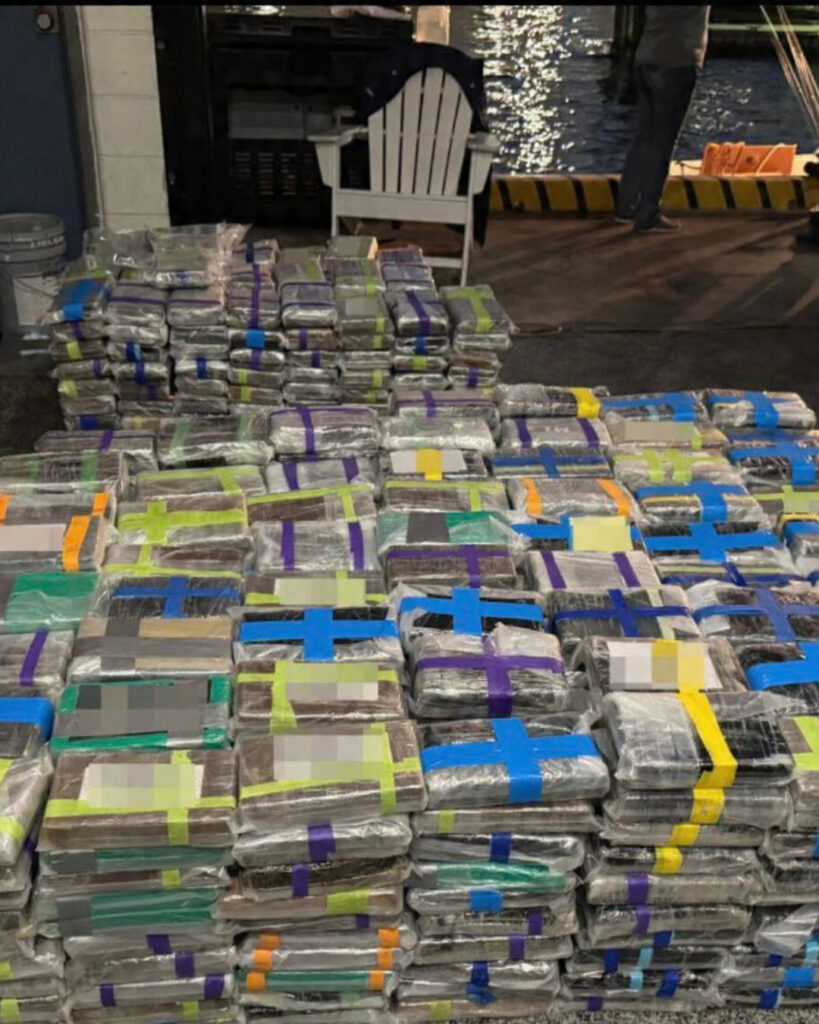
Federal agents released images showing the vessel being escorted back to shore and the massive stacks of seized narcotics lined across a secured dock. The drugs, packaged in multicolored tape wrappings typically associated with Caribbean-to-Florida trafficking routes, were transferred to Homeland Security Investigations for processing and evidence documentation.
Three individuals aboard the vessel were detained without incident and are now in federal custody, facing multiple narcotics-trafficking charges. Their identities have not yet been released pending a formal indictment, but officials indicated they may have ties to a larger smuggling network operating between South America, the Caribbean, and South Florida—one of the busiest maritime transit corridors for cocaine entering the United States.
Coast Guard officials emphasized that the seizure highlights the continued evolution of trafficking tactics along Florida’s coastlines. While large-scale interdictions often take place far offshore, smugglers have increasingly attempted to blend into recreational boating traffic closer to U.S. shores. Ross said that Friday’s operation demonstrates how critical rapid-response small boat stations remain in disrupting drug-smuggling activity before narcotics enter major U.S. distribution channels.
The 3,700-pound haul surpasses anything seized by a small Coast Guard station since 1995, reflecting both the sophistication of interdiction methods and the persistent efforts by federal agencies to curb maritime narcotics trafficking. The cocaine will be transported to a secure federal facility for destruction, while the investigation into the trafficking network remains ongoing.
Officials say the operation not only represents a major financial blow to the drug organization responsible but also underscores the importance of coordinated federal partnerships in protecting U.S. coastlines. Further updates are expected as prosecutors move forward with the case and federal investigators continue tracing the origins and intended destination of the shipment.