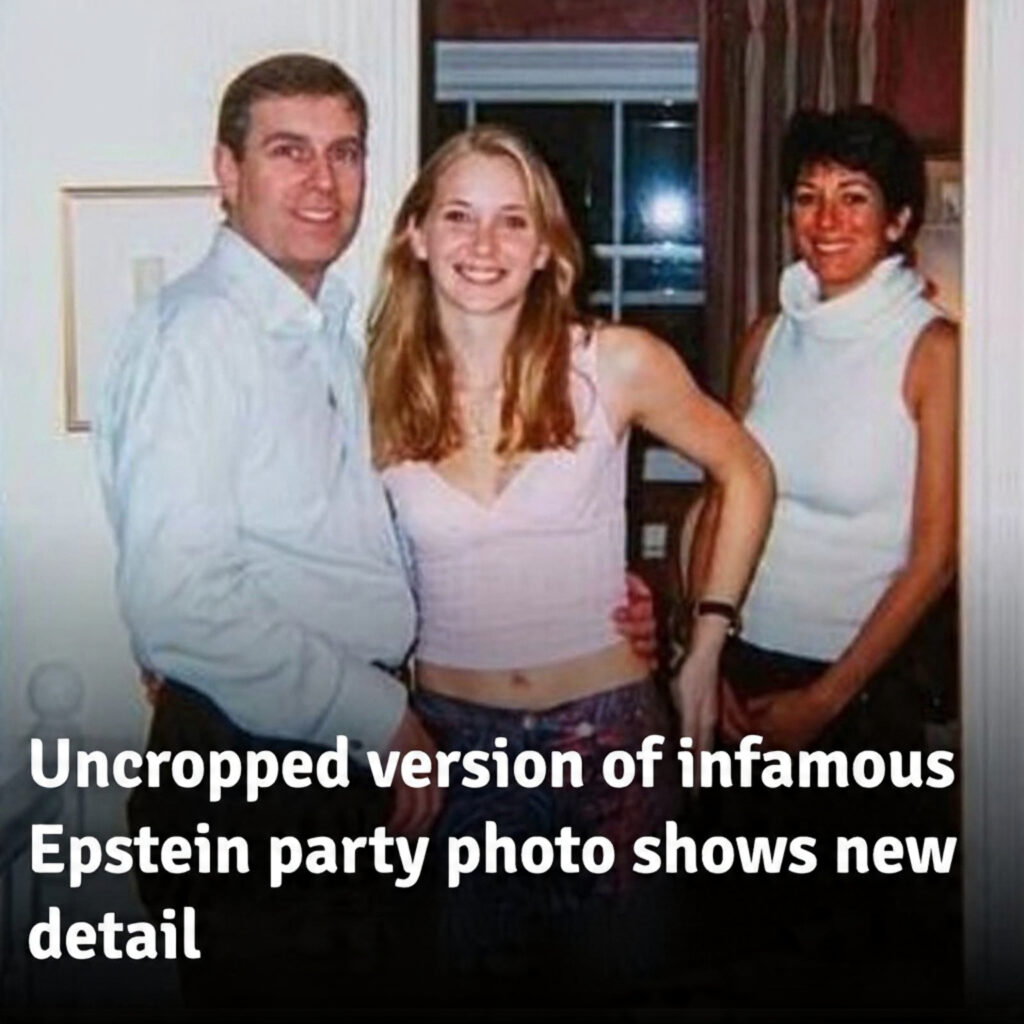
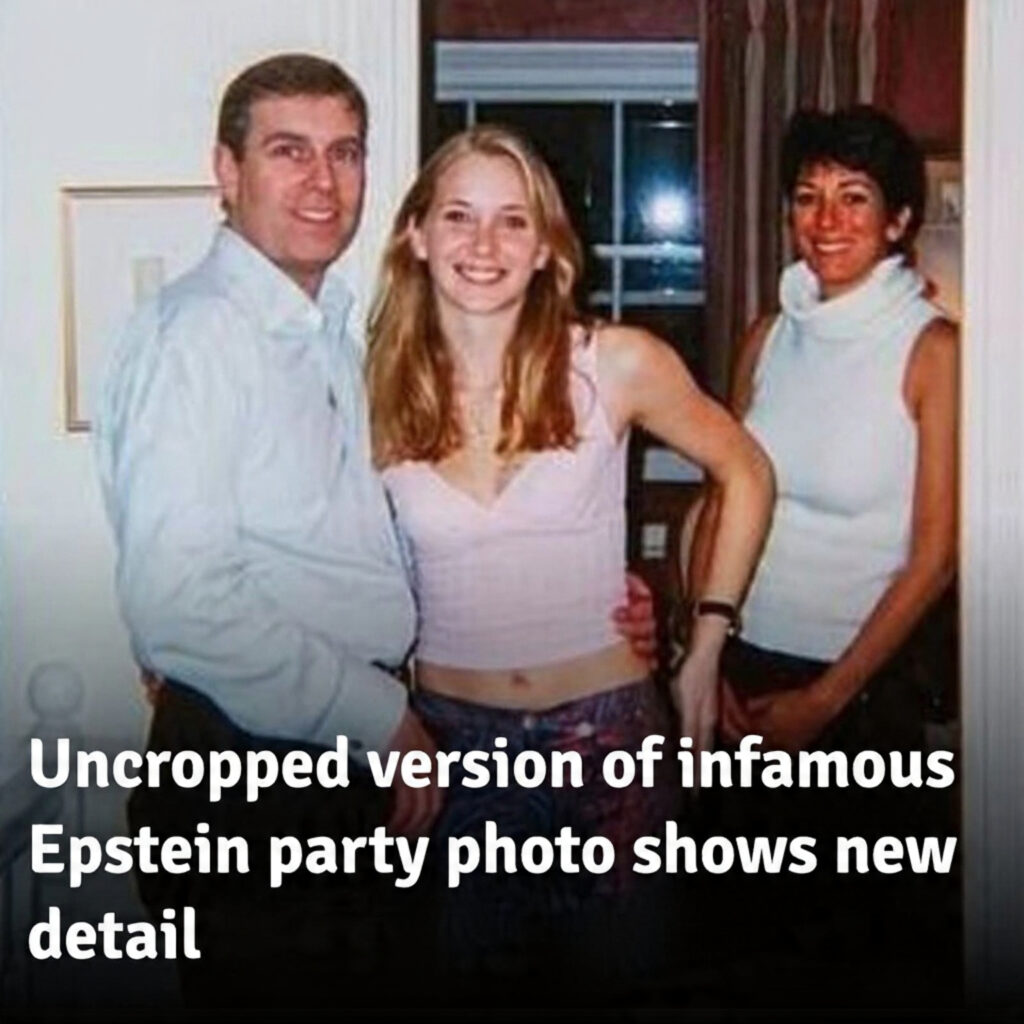
A single photograph, circulated for years in media reports and court filings connected to disgraced financier Jeffrey Epstein, has once again captured public attention after an uncropped version resurfaced online. Long described as one of the most controversial images linked to the Epstein scandal, the photo’s wider framing has renewed debate—not because it changes facts, but because it highlights how imagery, context, and unanswered questions continue to shape public understanding of one of the most disturbing abuse cases in recent history.
What the Photo Represents
The image, taken in the early 2000s, has been referenced repeatedly in civil lawsuits, investigative journalism, and public statements. It has often been cited by survivors as corroborating evidence that Epstein’s inner circle included powerful and well-connected individuals. Over the years, the photograph became symbolic—less about the moment it captured and more about what it suggested regarding access, influence, and alleged complicity.
The uncropped version adds background detail and additional figures, offering more context about the setting. However, experts stress that the broader frame does not introduce new verified evidence of criminal conduct beyond what courts and investigators have already examined. Instead, it underscores how Epstein’s social environment blurred lines between wealth, privilege, and accountability.
Established Facts vs. Speculation
Jeffrey Epstein was arrested in July 2019 on federal charges of sex trafficking minors. He died weeks later in a New York jail while awaiting trial, an event officially ruled a suicide but one that continues to fuel skepticism due to documented failures at the facility. His longtime associate, Ghislaine Maxwell, was later convicted in federal court for her role in recruiting and grooming underage girls for Epstein and sentenced to 20 years in prison.
Also read this: Fundraiser for Australian Hero Who Disarmed Terrorist at Bondi Beach Surpasses $2.6 Million
Numerous high-profile names surfaced in media reports and court documents during civil proceedings. Importantly, inclusion in documents or photographs does not equate to guilt, a distinction repeatedly emphasized by judges and legal analysts. Several individuals publicly denied wrongdoing, and many were never charged.
Why the Image Still Matters
The renewed focus on the photograph reflects broader public frustration with how the Epstein case ended. Epstein’s death meant there was no full criminal trial, no public accounting of all potential enablers, and no definitive answers to lingering questions about who knew what—and when.
Media scholars note that powerful images often become stand-ins for unresolved justice. In this case, the photograph symbolizes perceived gaps in accountability, especially when wealth and status intersect with criminal investigations.
The Larger Conversation
Survivors’ advocates argue that the attention should remain on victims and systemic failures that allowed abuse to continue for years despite warnings, prior convictions, and settlements. They caution against allowing viral images to distract from policy reforms, institutional oversight, and survivor support.
Read more: ICE Lodges Detainer for Illegal Immigrant Charged in Killing of New York Taxi Driver
As the uncropped image circulates, it serves less as a revelation and more as a reminder. The Epstein case remains a stark example of how influence can delay consequences—and how, even years later, a single photograph can reignite calls for transparency, responsibility, and justice that many believe remain incomplete.