
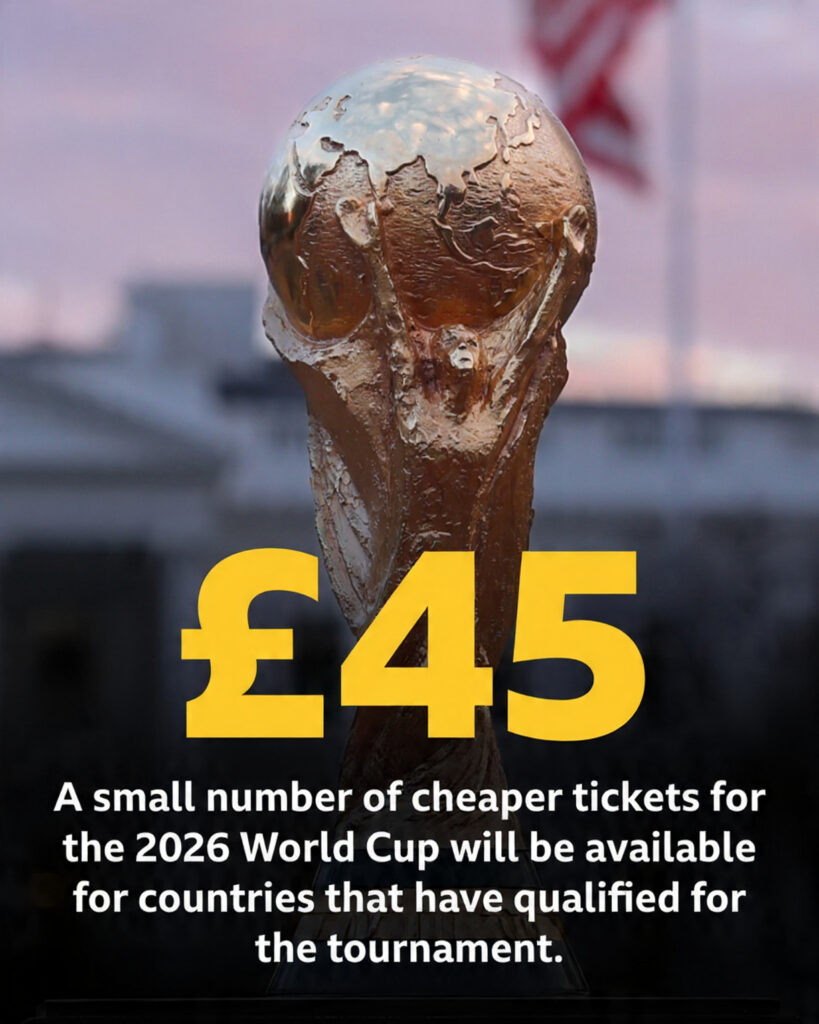
FIFA has announced a limited release of lower-priced tickets for the 2026 FIFA World Cup, responding to mounting criticism from supporters and fan organizations over what many described as unaffordable and exclusionary pricing for football’s biggest tournament.
Under the revised plan, FIFA will offer a limited number of “supporter entry tier” tickets priced at $60 (£45) for all 104 matches at the expanded 48-team World Cup, which Canada, Mexico, and the United States will jointly host, starting next year. The governing body says these tickets will be reserved for a select group of “loyal fans” from countries that qualify for the tournament.
The move follows weeks of backlash from supporters’ groups and national associations, who warned that FIFA’s original pricing model risked turning the World Cup into an event only accessible to wealthy fans and corporate guests.
FIFA: “We Have Listened”
A FIFA official close to the discussions confirmed that the decision followed internal meetings held over the weekend and early this week in Doha, Qatar, where pricing feedback was presented to senior leadership.
“We have listened to feedback and this new category is the right thing to do,”
the official said, adding that the decision was unanimous among FIFA’s leadership.
In a formal statement, FIFA said the new pricing structure aims to strike a balance between accessibility and the financial realities of staging the largest World Cup in history.
“The entry tier tickets will be allocated specifically to supporters of qualified teams, with the selection and distribution process managed individually by the participating member associations (PMAs),” FIFA said.
Each national football association will be responsible for defining what qualifies as a “loyal fan” and how tickets are distributed, a move that gives federations broad discretion but also raises concerns about transparency and fairness.
How the New Ticket Structure Works
According to FIFA, 50% of each national association’s ticket allocation will now fall within the most affordable pricing bands:
- Supporter Value Tier: 40%
- Supporter Entry Tier (£45 / $60): 10%
The remaining 50% will be split evenly between:
- Supporter Standard Tier
- Supporter Premier Tier
For countries such as England and Scotland, this translates to roughly 400 tickets priced at £45 for each group-stage match, out of tens of thousands of seats per game.
Political and Fan Reaction
UK Prime Minister Sir Keir Starmer welcomed FIFA’s announcement but made clear it does not go far enough.
“As someone who used to save up for England tickets, I encourage FIFA to do more to make tickets more affordable so that the World Cup doesn’t lose touch with the genuine supporters who make the game so special,”
Starmer said.
Supporters’ groups were far more critical.
The Football Supporters’ Association (FSA) had previously branded FIFA’s original ticket pricing “scandalous,” noting that under the initial structure it would have cost more than £5,000 for a fan to follow England through every match to the final.
FSA chair Tom Greatrex dismissed FIFA’s revised plan as insufficient.
“What sounds like a climbdown is a cynical attempt to deflect attention while continuing to rip fans off,”
he said, calling the changes a “hollow gesture.”
Similarly, Football Supporters Europe (FSE) acknowledged FIFA’s partial shift but argued that the fundamental issue remains unresolved.
“While we welcome FIFA’s seeming recognition of the damage its original plans were to cause, the revisions do not go far enough to reconcile with supporters,”
the group said in a statement.
Inside the Negotiations
English Football Association insiders, speaking privately, described the move as “a step in the right direction,” particularly after raising concerns directly with FIFA officials in Doha.
However, even within football’s governing structures, there is recognition that the limited number of low-cost tickets will do little to address broader affordability concerns—especially given the travel, accommodation, and visa costs associated with a tri-nation World Cup spread across a continent.
A Bigger World Cup, a Bigger Divide?
The 2026 tournament will be the largest World Cup ever, expanding from 64 to 104 matches and from 32 to 48 teams. FIFA has defended higher prices by pointing to increased operational costs, stadium upgrades, and security expenses across three host countries.
Critics counter that the World Cup’s commercial success—driven by sponsorships, broadcasting rights, and hospitality packages—should allow FIFA to protect access for ordinary fans.
As one supporter’s representative put it:
“If loyal fans can’t afford to be there, what exactly is the World Cup becoming?”
Qualified Countries for the 2026 FIFA World Cup
(As of current qualification status)
| Confederation | Country | Qualification Status |
|---|---|---|
| CONCACAF | United States | Qualified (Host) |
| CONCACAF | Canada | Qualified (Host) |
| CONCACAF | Mexico | Qualified (Host) |
Note: Qualification matches for other confederations (UEFA, CONMEBOL, CAF, AFC, and OFC) are ongoing. Additional countries will be added to the qualified list as official qualification tournaments conclude.
Looking Ahead
While FIFA’s introduction of £45/$60 tickets marks a rare concession to supporter pressure, the limited scale of the initiative suggests the debate is far from over. With millions of fans hoping to attend the 2026 World Cup, the central question remains whether football’s biggest event can remain connected to its traditional fan base—or whether affordability will continue to be the sport’s most contentious off-field issue.
For now, loyal supporters may have a slightly better chance of getting through the gates—but many fear that for most fans, the World Cup dream is still priced out of reach.