
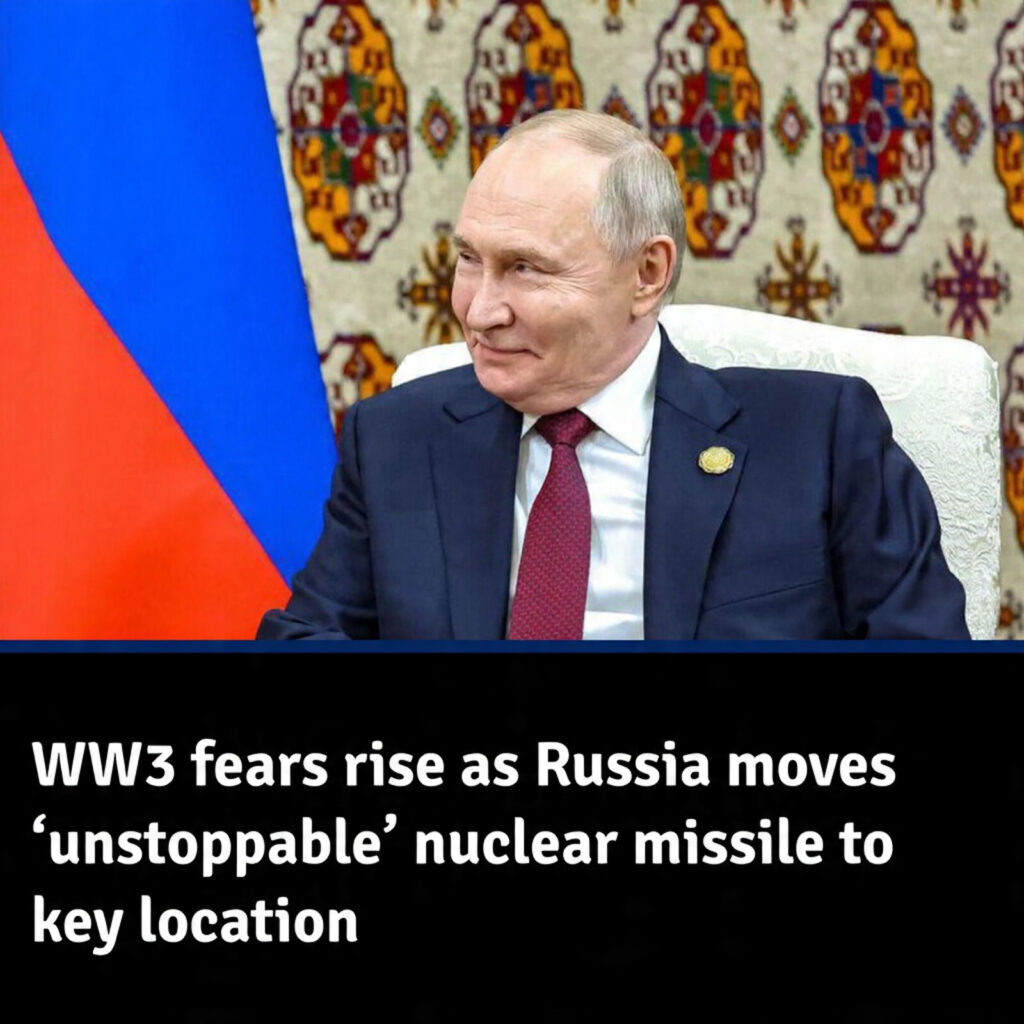
“So what’s actually happening?” one anxious reader asked. “Is Europe really facing a new nuclear threat?”
Short answer: Moscow has announced that the new Oreshnik missile — a fast, hard-to-intercept system that Russian officials say can carry conventional or nuclear warheads — is entering service and is being positioned in Belarus. But what that means for Europe, NATO, and the risk of wider escalation is a mix of confirmed facts, Kremlin claims, and unanswered questions.
Below, reporters, analysts, and officials walk through the claims, the evidence, and the real uncertainties.
Reporter: “Give me the timeline — when did this all start?”
Analyst:
President Vladimir Putin said Russia’s Oreshnik missile had entered serial production and would be deployed outside Russia; at a summit with Belarusian President Alexander Lukashenko earlier this year, Putin floated the possibility of stationing the system in Belarus, and Russian and Belarusian officials have since said deployment preparations are under way.
Reporter: “And the most recent confirmation?”
Analyst:
State media reports and international outlets say Belarus is set to receive Oreshnik launchers and that officials expect them to be fielded by the end of the year — a move Belarusian spokespeople described as a defensive response to Western actions. Reuters reported Belarus would deploy the Oreshnik in December, citing Belarusian officials.
What is the Oreshnik?
Military Correspondent: “Put simply: officials describe it as an intermediate-range, hypersonic ballistic missile capable of very high speeds and multiple warheads; Russian statements indicate it can carry nuclear or conventional payloads and is harder for existing missile-defense systems to intercept.”
Caveat: independent verification of exact performance — range, payload, seeker technology — is limited in open sources. Some Western analysts caution that Russian statements sometimes overstate operational readiness or capabilities as part of signaling.
Why Belarus?
Reporter: “Why put it in Belarus instead of inside Russia?”
Strategic Analyst:
Deploying long- or intermediate-range systems on Belarusian soil shortens flight times to European targets, complicates NATO planning and raises political pressure on neighbouring states. U.S. and European officials see the move as part of a pattern: using Belarus not just for training, but as a forward base that can threaten NATO’s eastern flank. Ukraine’s intelligence services have also warned that emplacement of Oreshnik launchers in Belarus is intended to put Europe within striking distance.
Is This a Nuclear Deployment?
Defense Expert:
The Oreshnik is reported to be dual-capable (conventional and nuclear). Russia’s own rhetoric has linked it to their updated nuclear posture and to guarantees extended to Belarus. However, the presence of nuclear warheads on Belarusian soil — which would have far greater political and legal implications — has not been independently verified with open-source evidence. History shows Moscow can signal deterrence without immediately moving nuclear warheads into partner countries; nonetheless, the possibility cannot be dismissed.
How “Unstoppable” Is It, Really?
Weapons Analyst:
The label “unstoppable” is political shorthand. The missile’s reported hypersonic speeds and multiple reentry vehicles complicate interception, but missile-defense systems are evolving and layered. No modern weapon is literally unstoppable; rather, the Oreshnik raises the technical bar, increases the chance of successful strikes against certain targets, and thus raises the stakes in a crisis. Independent technical confirmation is scarce; most assessments rely on a mix of Kremlin statements, sparse imagery, and Western technical judgment.
What Are NATO and Western Officials Saying?
Diplomatic Correspondent:
Western governments have voiced alarm and described the deployment as escalatory. NATO officials have repeatedly warned that placing advanced strike systems closer to alliance borders increases the risk of miscalculation, shortens decision windows, and complicates crisis stability. European capitals have called for urgent consultations; public statements emphasize deterrence and readiness while avoiding provocative language that might accelerate tensions. (See recent NATO commentary and public briefings.)
What Does This Mean for the Public?
Policy Observer:
For most Europeans and Americans, the immediate practical change is heightened political tension and an increased diplomatic focus on de-escalation channels. Militarily, the deployment shortens warning times for certain scenarios and forces NATO to consider adjustments in air, missile-defense and early-warning posture. The risk of an inadvertent escalation — where routine military activity is misread as hostile intent — is the main concern experts raise.
Bottom Line
We have a credible, multi-source record that Russia has produced a new high-speed IRBM called Oreshnik, that Moscow has declared it entered service, and that both Russian and Belarusian officials have signaled intentions to deploy the system in Belarus. Those facts are clear. But how capable the missile is in practice, whether nuclear warheads will be placed in Belarus, and how NATO will respond — those are uncertain and hinge on intelligence that is not fully public.
If you want, our newsroom can prepare a visual timeline of public statements, satellite imagery analyses (where available), and a deeper primer on missile-defense options so you can judge the scale of the threat for yourself.
Sources & Further Reading: Reuters, Associated Press, RUSI, Institute for the Study of War / Understanding War, Ukrinform.
If you’d like this packaged into a short explainer graphic for social sharing, please let me know the size and tone (urgent, measured, alarmed), and I’ll draft it.