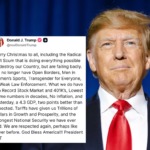
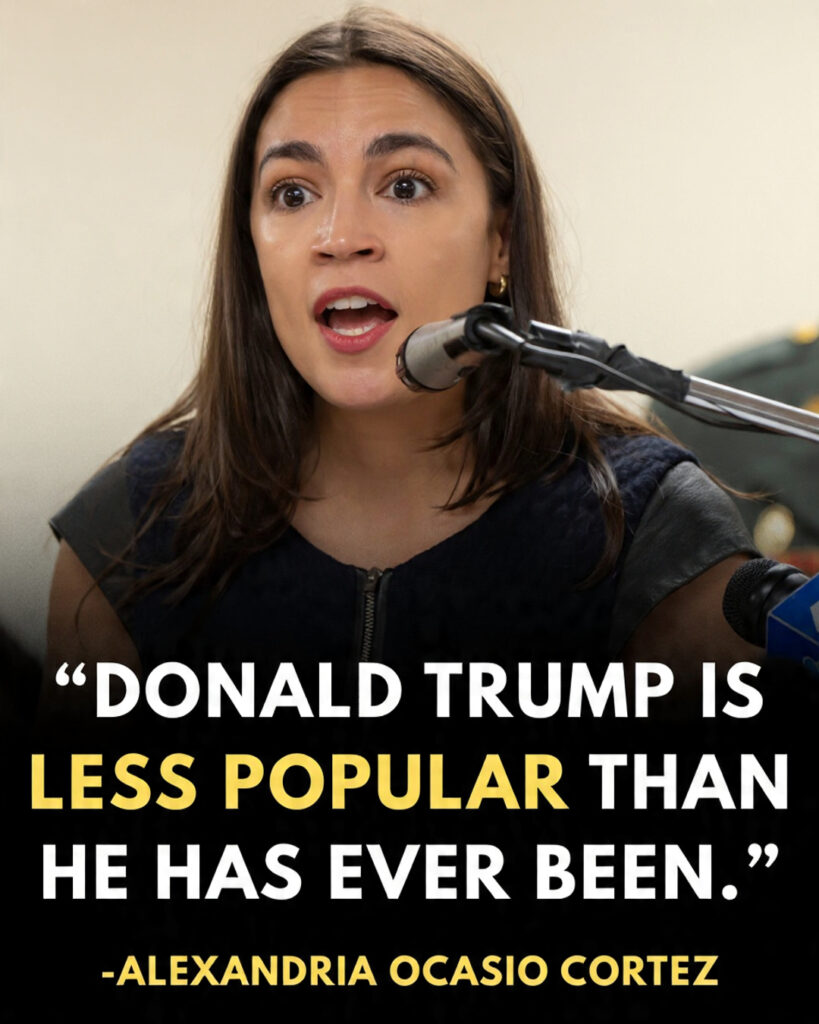
Washington, D.C. — Representative Alexandria Ocasio-Cortez renewed her criticism of former President Donald J. Trump this week, asserting that his popularity has reached “rock bottom” and that “more people disapprove” of his political leadership than ever before. Her remarks add to the ongoing debate over Trump’s standing in a sharply polarized electorate.
While public opinion polls show Trump continuing to face significant challenges, particularly among independents and suburban voters, political analysts caution that his support base remains deeply entrenched. Despite fluctuating approval ratings, Trump still commands loyalty from millions of Americans who reject progressive policies and remain aligned with his populist message.
Republican strategists argue that Ocasio-Cortez’s characterization oversimplifies a political reality that is far more complex. They note that Trump continues to draw large crowds at rallies, holds substantial influence within the Republican Party, and maintains strong support among voters frustrated by economic pressures, immigration concerns, and cultural divisions.
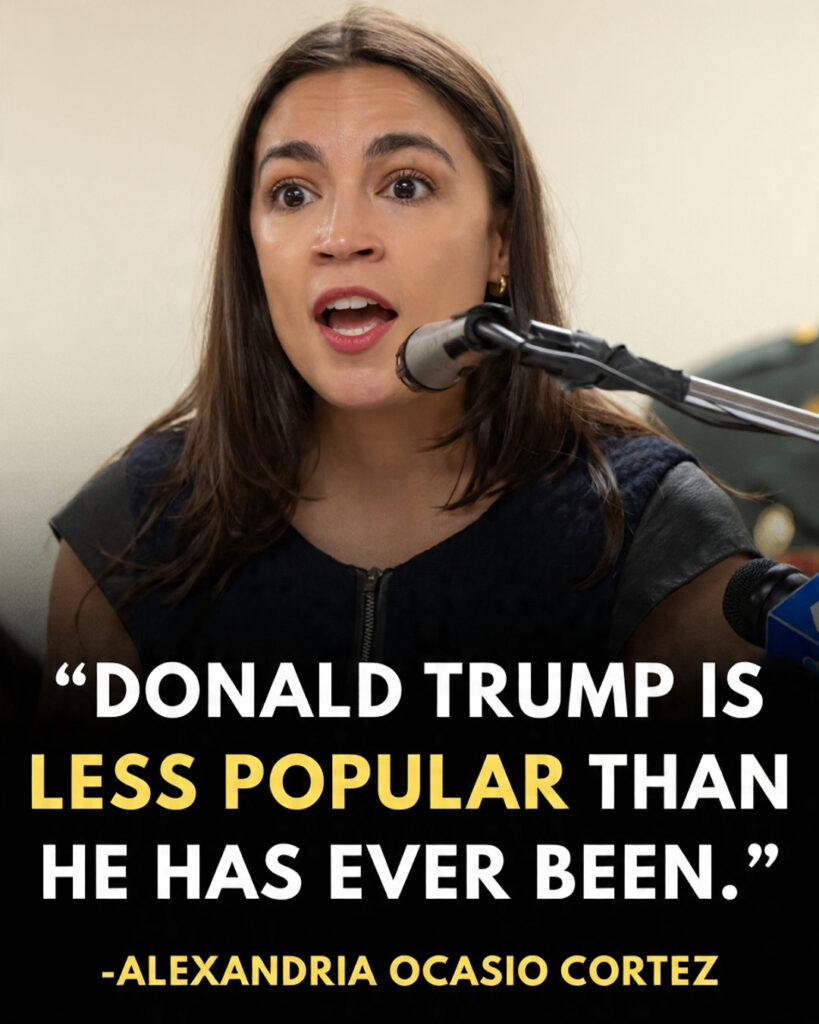
Democrats, meanwhile, point to broader national surveys showing heightened dissatisfaction with Trump’s tenure and skepticism about his return to political leadership. Ocasio-Cortez, one of the most outspoken progressive voices in Congress, has frequently criticized Trump’s policies and governing style, framing his approval trends as evidence that the country is moving away from what she describes as “reactionary politics.”
Political experts emphasize that approval ratings—while informative—do not fully capture the intensity or durability of voter support. Trump’s core base has remained remarkably consistent through multiple controversies, legal challenges, and election cycles, a factor that continues to shape national political dynamics.
As both parties prepare for the next phase of the election season, the divide over Trump’s influence shows no sign of narrowing. Whether his support is diminishing or consolidating remains a central question in an increasingly contentious political landscape.