
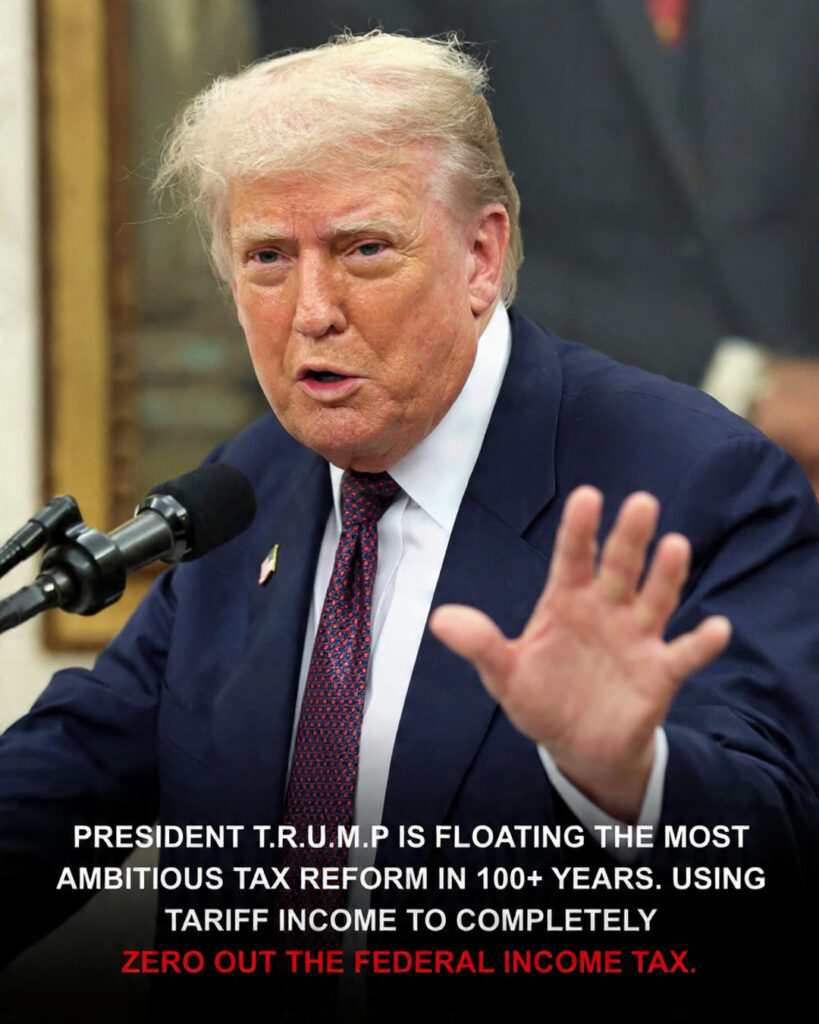
President Donald Trump has ignited one of the most provocative economic debates in modern U.S. history with his latest proposal: replacing federal income tax revenue entirely with money generated from tariffs.
If enacted, it would represent the most sweeping tax reform in more than a century, fundamentally reshaping how the federal government is funded. The idea has energized supporters who view it as a patriotic realignment of financial burden — and alarmed critics who warn it could destabilize both the U.S. economy and global trade.
At the center of the proposal is a simple but seismic question: Can tariffs realistically generate enough revenue to eliminate income taxes for all Americans? Currently, income taxes make up the largest component of federal revenue, contributing well over a trillion dollars annually.
Tariffs, even during periods of aggressive trade policy, have historically produced only a fraction of that amount. Economists note that matching income tax revenue would require tariff rates at levels unprecedented in U.S. history — potentially triggering sharp increases in consumer prices, retaliatory trade measures, and disruptions to supply chains.
Supporters of the plan argue that such tariffs would revive domestic manufacturing, reduce reliance on foreign imports, and allow American workers to keep more of their paychecks. They claim the economic boost from increased purchasing power and industrial growth could offset the challenges posed by higher import costs.
Moreover, they argue that countries dependent on exporting goods to the United States would ultimately absorb much of the tariff burden.
However, critics counter that consumers would bear the brunt of these costs through higher prices on everyday products, from electronics to clothing to groceries. They warn that aggressive tariff expansion could provoke trade partners into imposing their own taxes on American goods, sparking a global trade conflict that could harm U.S. farmers, exporters, and small businesses.
As the debate intensifies, one conclusion is clear: the proposal marks a bold, controversial reimagining of federal finance. Whether it becomes a revolutionary restructuring or remains an ambitious political talking point will depend on economic models, congressional support, and the reaction of global markets. For now, the question remains open — is a zero-income-tax America possible, or merely provocative political theater?